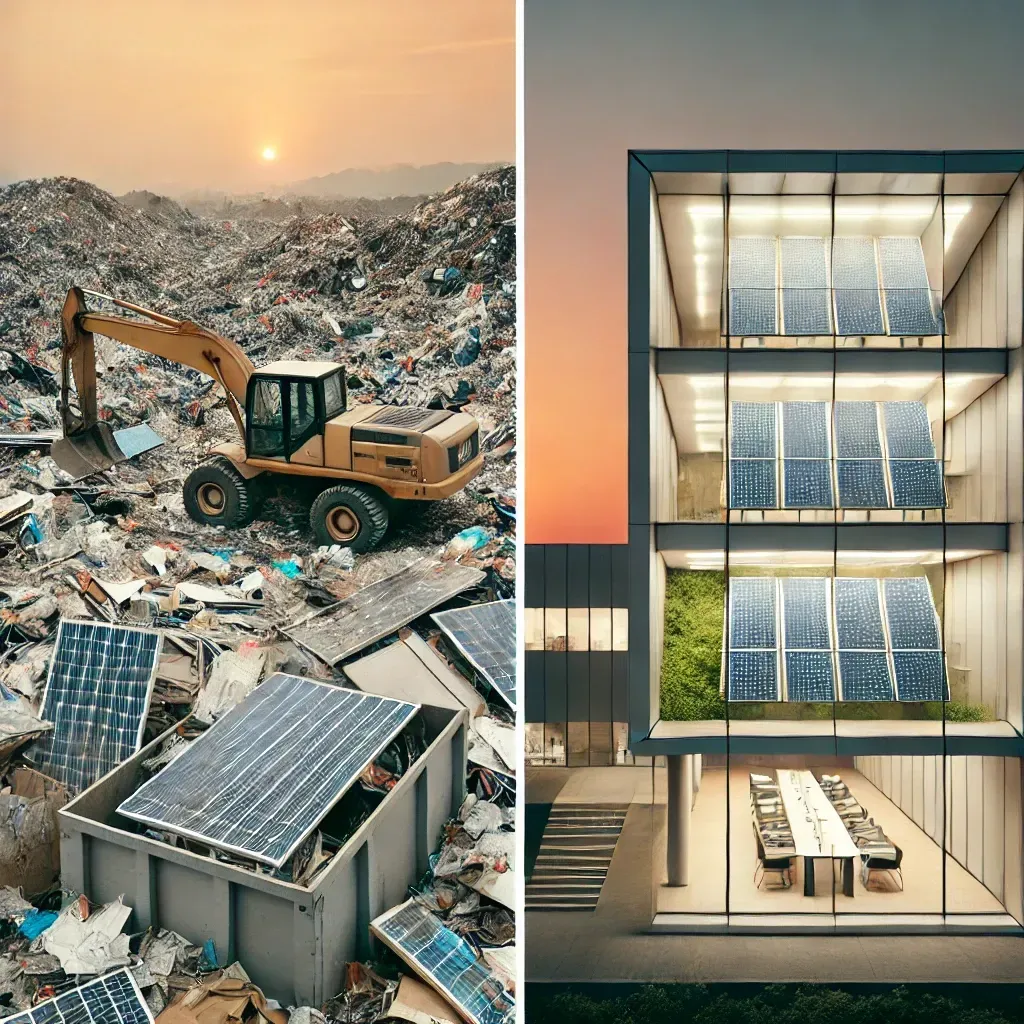
From Waste to Resource
From Waste to Resource: The Case for Repurposing Solar Panels
As the world increasingly turns to renewable energy, solar panels have become a cornerstone of sustainable electricity generation. However, as these panels reach the end of their operational life, we face a critical question: should we recycle them or repurpose them? While recycling is undoubtedly important in managing waste and recovering valuable materials, repurposing offers unique advantages that can lead to more sustainable practices and greater community benefits.
The Importance of Recycling
Before delving into the benefits of repurposing, it’s essential to acknowledge the role of recycling. Recycling solar panels helps recover valuable materials such as silicon, aluminum, and silver, which can be reused in new products. In 2025, the size of the solar panel recycling market is estimated at USD 2.43 billion, with projections indicating it could exceed USD 118.54 billion by 2037, growing at a compound annual growth rate (CAGR) of over 37.6% during this period.
According to the International Energy Agency (IEA), renewable capacity is expected to meet 35% of global power generation by 2025, with solar power projected to account for a significant portion of this growth. In fact, solar PV alone accounted for three-quarters of renewable capacity additions worldwide in 2023, demonstrating its rapid expansion and importance in the global energy landscape.
However, while recycling is a vital component of sustainability, it often involves energy-intensive processes and may not fully address the needs of communities facing energy access challenges.
The Case for Repurposing
1. Extending Lifespan
Repurposing solar panels extends their lifespan beyond their initial use. Many panels still retain a significant amount of their efficiency even after reaching their designated operational life. According to a report from the University of New South Wales, more than 80% of decommissioned solar panels by 2030 are projected to come from small-scale distributed PV systems. By finding new applications for these panels—such as in off-grid solar installations or community projects—we can maximize their utility and delay the need for new manufacturing.
2. Cost-Effective Solutions
Repurposed solar panels can provide cost-effective solutions for underserved communities. For example, schools in remote areas can benefit from affordable solar power systems using decommissioned panels. This approach not only provides electricity but also fosters educational opportunities around renewable energy technologies.
3. Reducing Environmental Impact
While recycling is beneficial, it often requires transportation and processing that contribute to carbon emissions. Repurposing eliminates much of this logistical footprint by keeping panels within local communities where they can be used directly. This localized approach minimizes transportation emissions and promotes a circular economy.
4. Fostering Innovation
Repurposing encourages creativity and innovation in how we think about solar technology. Artists and designers have begun transforming old panels into functional art pieces or building materials for eco-friendly structures. These creative uses not only highlight the potential of decommissioned panels but also raise awareness about sustainability in everyday life.
5. Building Community Resilience
By repurposing solar panels, we can empower communities to take control of their energy sources. Local organizations can establish programs that train individuals to install and maintain repurposed solar systems, creating jobs and enhancing local skills while promoting energy independence.
Navigating Opportunities for Innovation
While repurposing offers numerous benefits, it is essential to acknowledge potential challenges that can also serve as opportunities for growth and improvement:
- Logistical Challenges: Transportation and installation can pose hurdles in implementing repurposed systems effectively. For instance, some projects may require specialized equipment or trained personnel for installation. However, these challenges present an opportunity for local partnerships to flourish. By collaborating with community organizations and businesses, we can develop effective solutions that streamline logistics and enhance project implementation.
- Durability Concerns: Some panels may experience efficiency degradation over time. Assessing the condition of decommissioned panels through advanced testing technologies can ensure that only viable units are repurposed. This challenge opens the door for innovation in repair techniques and refurbishment processes, fostering a culture of creativity and resourcefulness within communities.
A Global Perspective
Repurposing solar panels also has implications on a global scale. Local efforts contribute to international sustainability goals, such as the United Nations Sustainable Development Goals (SDGs). Specifically, Goal 7 (Affordable and Clean Energy) emphasizes the need for universal access to sustainable energy sources, while Goal 12 (Responsible Consumption and Production) encourages minimizing waste through innovative practices like repurposing.
By connecting local initiatives to these global objectives, we can enhance our collective impact on sustainability.
A Balanced Approach
It’s important to recognize that recycling and repurposing are not mutually exclusive; they can complement each other in a comprehensive waste management strategy. While recycling remains crucial for recovering materials that cannot be reused directly, repurposing offers immediate solutions that can benefit communities today.
The Road Ahead
As we navigate the challenges of transitioning to a sustainable future, the case for repurposing solar panels becomes increasingly compelling. By prioritizing reuse over recycling where possible, we can extend the life of these valuable resources, reduce environmental impact, foster innovation, and build resilient communities.
What role will you play in shaping the future of solar panel sustainability? The time has come to rethink how we manage our solar assets—not just as waste at the end of their life cycle but as valuable resources that can continue to serve our communities in new ways. Let’s embrace the power of repurposing and turn yesterday’s solar panels into tomorrow’s solutions.